

African fashion & crafts: loincloths, clothing and Afro-chic jewelry
At Kaolack Créations, we prioritize authenticity: **hand-woven** fabrics, clean cuts, jewelry crafted by identified artisans. An Afro-chic style, a commitment to quality, a living culture.
African Craftsmanship & Afro Chic Fashion
Craftsmanship is time mastered: repeated gestures, an adjusting eye, materials that respond. Afro-chic fashion is the union of these skills and contemporary silhouettes. We wear an identity, we wear an intention: to bring to life the hand that creates.
Hand-Woven African Fabric: Traditions and Materials
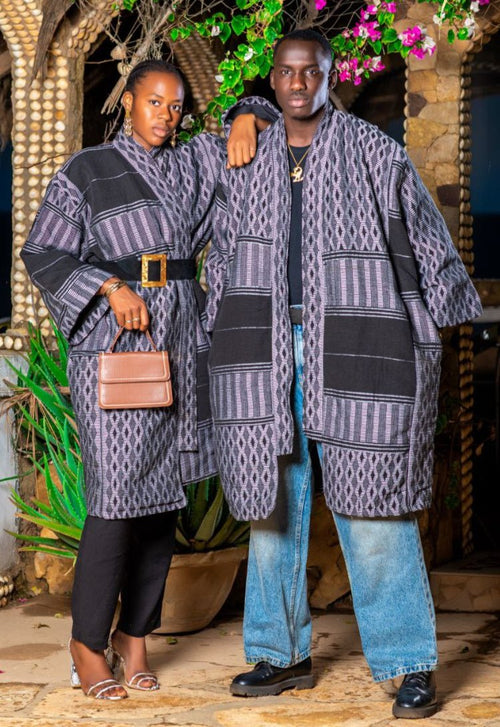
Woven fabric is among the continent's major textile heritage. Tight cotton strips, clean selvages, dense textures: an architecture of threads. Depending on the region, techniques and symbols vary, but the requirement remains the same: precision, patience, transmission.
Manjak (Senegal, Guinea-Bissau)
Woven on a wooden loom, distinct stripes, subtle relief. A dense, elegant fabric with a good drape. Example: Manjak woven fabric scarf.
Kente / Kita (Ghana, Côte d’Ivoire, Togo)
Colorful strips, controlled geometries, strong symbolic value. An internationally recognized textile language, hand-woven, coded, structured.
Faso Dan Fani (Burkina Faso)
Woven cotton, matte texture, impeccable hold. A committed textile, which has become an emblem of proud and inventive local production.
Lépi, Kanvô, Seurou Rabeul…
West Africa and beyond: each region has its own weave, density, and colors. From Lépi in Benin to Seurou Rabeul in Senegal, these fabrics remain solid references for durable pieces.
Why choose hand-woven?
For the drape: a fabric that lives, breathes, and develops a patina. For ethics: a short chain, fairly compensated artisans. For culture: a piece that preserves the memory of the gesture and brings it to the present.
We favor reasoned volumes, clean finishes, and **truly** worked materials. Less, but better.
Our essentials: woven fabrics, clothing, jewelry
Our African woven fabrics form the basis of our universe: Manjak, Kente/Kita, Faso Dan Fani, Bogolan… Authentic materials for pieces that last.
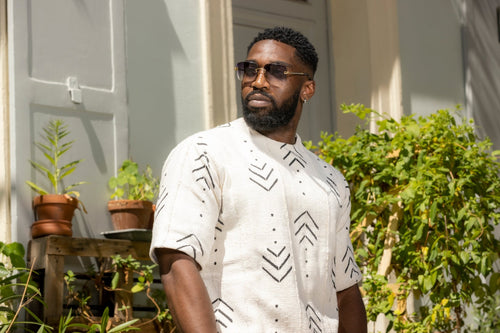
As for clothing, our bogolan jackets and tunics maintain a clear line: sober cuts, straightforward drape, daily comfort. We avoid the trendy effect; we aim for the good.
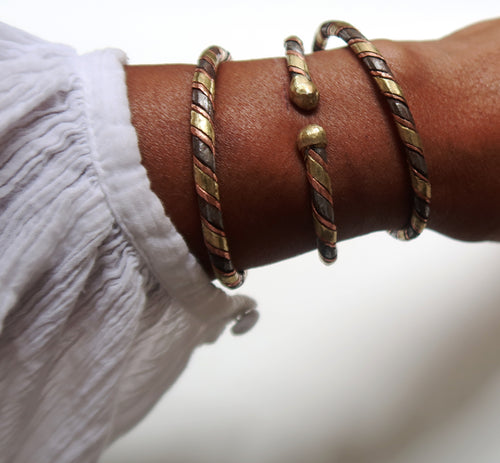
African jewelry extends this coherence: cowries, bronze, refined forms. A possible patina: normal, desirable. A visible soul: essential.
Know-how & workshops
We work directly with workshops in Mali, Senegal, Ghana. No unnecessary intermediaries. A clear relationship: quality, reasonable deadlines, fair prices. Behind each piece, names and faces.
Kolokani for bogolan, Manjak weavers in Ziguinchor, tailors in Dakar. A short, transparent, respectful chain. That is our method.
Explore further
To nurture knowledge and style, read: African Fashion & Craftsmanship, Kheper: Symbolism & History, Ankh: Meaning & Uses. And browse all our collections to find your piece.
Our values
Preserve **true African craftsmanship**. Value the hand that weaves, sculpts, and shapes. **Create employment** and keep skills alive. Transmit without folklorizing.

Frequently Asked Questions
What distinguishes a hand-woven African fabric?
How do I care for a woven fabric?
Can your bronze jewelry develop a patina?
Do you deliver to Europe and Africa?
Last updated: