Kaolack Créations
Hammered Bronze Ankh Ring – Unisex, Adjustable African Jewelry
Hammered Bronze Ankh Ring – Unisex, Adjustable African Jewelry
Couldn't load pickup availability
- Free shipping on orders of €70 or more (France and EU)
- Shipped from Paris, with tracking
- 14 days to change your mind
- Pay in installments: Alma, Klarna or PayPal
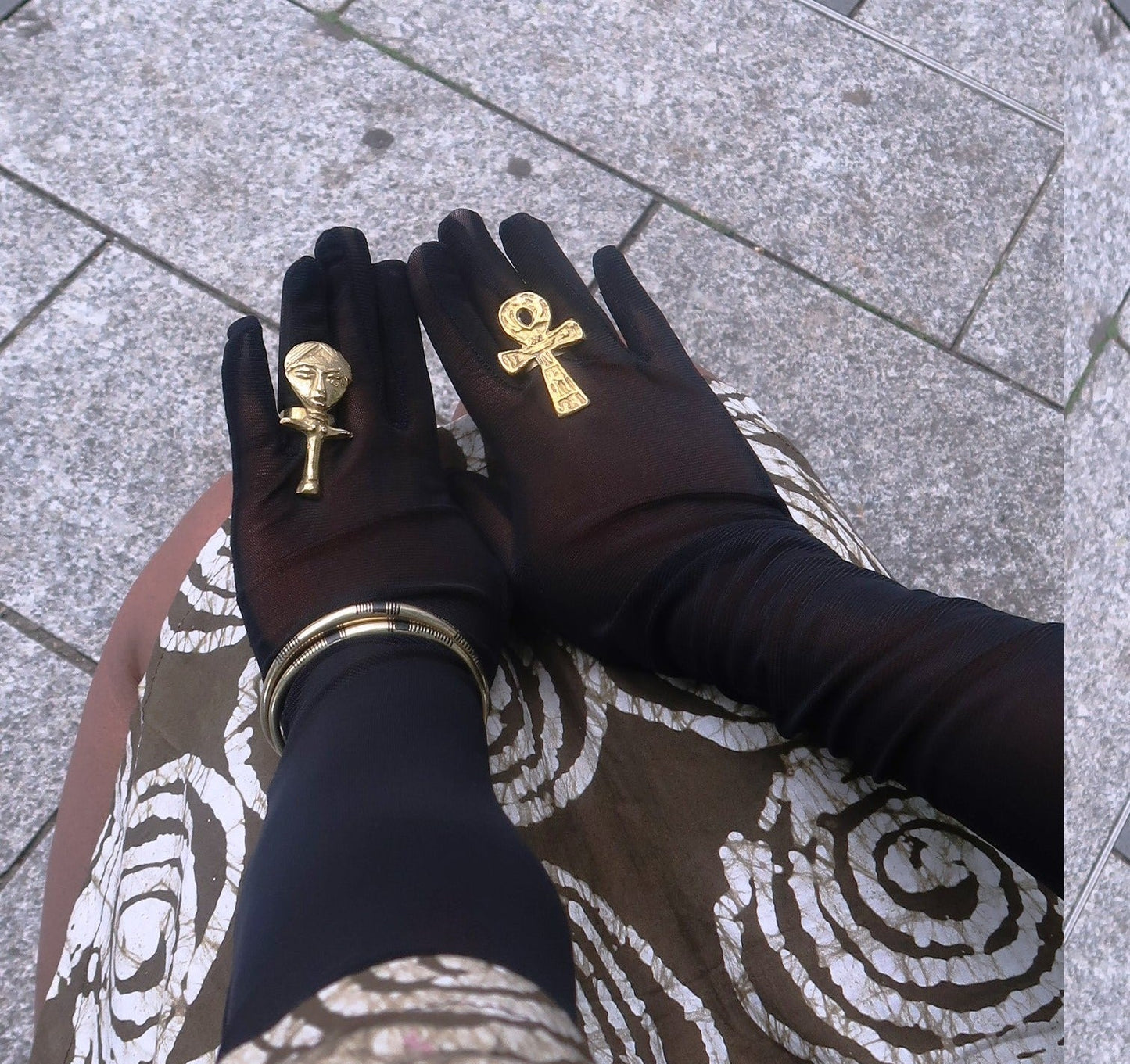
The hammered bronze Ankh ring bears Africa's oldest symbol of life: the Ankh cross of ancient Egypt. Handmade in Africa, open and adjustable, it suits women and men alike. Its raw hammering, deliberately visible, keeps the trace of the artisan's hand.
What does Ankh mean?
Ankh is a hieroglyph of ancient Egypt, Kemet, meaning “life”. It is also called the crux ansata or “key of life”: a cross topped with a loop.
On temple walls, deities hold the Ankh by its loop and present it to the pharaohs, as one passes on the breath of life. The symbol has crossed the centuries: the Coptic Christians of Egypt adopted it as a cross, and today it is one of the signs most worn by Africans and the diaspora to affirm their bond with the continent's history.
Kemet, an African civilization
Wearing the Ankh is also a reminder that ancient Egypt belongs to the history of Africa. The Senegalese historian Cheikh Anta Diop devoted his work to defending this idea, notably by comparing the language of Kemet with present-day African languages. We come back to this in our article Wolof and Kemet: what the Wolof language says about ancient Egypt. Another great Kemetic symbol: Kheper, the scarab of becoming.
Ring details
- Material: raw hammered bronze
- Motif: Ankh cross
- Motif dimensions: 5 cm (2 in) high, 3 cm (1.2 in) wide
- Size: open, adjustable band, fits most fingers
- Making: handmade in Africa
- Style: unisex, women and men
As each ring is hammered by hand, the texture varies slightly from one piece to another.
How to wear the Ankh ring?
With its generous motif, it is worn on its own, as a statement piece. For a full set, pair it with the hammered bronze Ankh necklace or the bronze Ankh earrings. It looks great with handwoven cloth as well as a plain outfit. Browse the whole Ankh and Kemetic jewelry collection and our African rings.
Frequently asked questions about the Ankh ring
What does Ankh mean?
Ankh is the Egyptian hieroglyph meaning “life”. It is also called the crux ansata or key of life.
Where does the Ankh symbol come from?
It comes from ancient Egypt, Kemet, in the Nile valley. Deities and pharaohs are often depicted holding it.
Why wear an Ankh ring?
To wear a symbol of life, and affirm your bond with African history. It is also a meaningful gift for a birthday, a birth or a new start.
Is the Ankh ring for women or for men?
It is unisex and suits women and men alike.
Is the ring adjustable?
Yes. The band is open: simply open or gently close it to fit your finger.
How is it different from the solid silver Ankh ring?
The material and the look. The hammered bronze version has a raw, warm feel. The solid silver Ankh ring offers a lighter, finer look.
Can it be worn every day?
Yes. Simply take it off before showering, swimming in the pool or the sea.
How do I care for a bronze ring?
Wipe it with a soft, dry cloth and store it somewhere dry. Bronze develops a natural patina over time; a gentle metal polish restores its shine if you wish.
Is there a link between Ankh and Akwaba?
No lineage, but a resonance: the Akan Akwaba figurine, with its round head on a vertical axis, recalls the shape of the Ankh cross, and both symbols celebrate life.
Can I give it as a gift?
Yes, to a man or a woman: it is unisex and adjustable, so there is no risk of getting the size wrong. Wearing the cross of life sends a message; so does giving it. For a birthday, a birth, a new start or simply to make someone happy. You also have 14 days from delivery to change your mind.
Where can I see the ring before buying?
On kaolack-creations.com and in store at Kama The Shop, Paris 18th.
Kaolack Créations — Jewelry
Kaolack Créations offers traditional African jewelry and designer jewelry, made by traditional African artisans and Afro-descendant designers. Each piece belongs to a continuity of forms, gestures and symbols specific to African cultures.
In African civilizations, metals have a spiritual role. Silver, copper and bronze are worked using ancestral techniques passed on through direct apprenticeship, some of which are now forgotten or endangered.
Fair pay. We work with each artisan directly, over the long term, and we pay the price they set. Each order directly supports their craft and their local economies.
The jewelry combines aesthetics, meaning and real use, without folklorization or misappropriation. Adornment remains a language. To go further, read our article The social role of jewelry in Africa.
Share